


March 22, 2026
Key Highlights:
● M2M communication enables devices to exchange data autonomously, driving automation and efficiency across industries.
● Early protocols like MQTT, CoAP, and REST evolved to support low-power, low-bandwidth, and asynchronous communication.
● AI and machine learning allow machines to analyze data, predict outcomes, and make autonomous decisions.
● Applications span healthcare, manufacturing, agriculture, and smart cities, improving efficiency, safety, and resource management.
Estimated Reading Time: 10–13 minutes┃Post by Jane Doe
In an increasingly connected world, machine-to-machine (M2M) communication stands at the forefront of technological evolution. As the Internet of Things (IoT) continues its rapid growth, M2M communication is becoming more vital to the infrastructure that drives everything from industrial operations to home automation. This system of devices communicating with each other autonomously, without human intervention, is revolutionizing multiple industries, from healthcare and manufacturing to agriculture and smart cities.
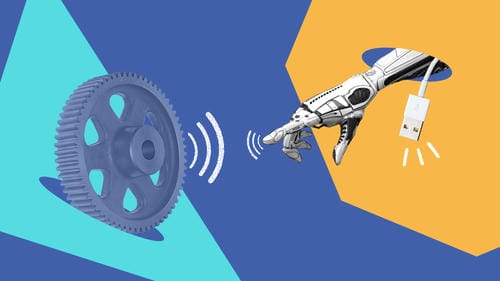
Machines no longer just relay basic data; they now exchange detailed information, analyze it, and make real-time decisions. As this communication becomes more sophisticated, it opens up new opportunities for automation, efficiency, and innovation. The question is no longer whether machines will communicate but how they will do so and what language they will speak. Understanding the evolution of M2M language is critical to understanding how we will interact with the world of tomorrow.
The Evolution of Machine Language: From Basic Protocols to AI-Driven Communication
When M2M communication first came onto the scene, it was rudimentary at best. Early systems were based on simple binary or text-based protocols that allowed machines to pass basic data to one another. These systems were, for the most part, reactive and limited in scope. The machines followed pre-set commands, and the communication was direct and static. Over time, however, the complexity of these systems increased, as more devices became connected and the needs of various industries began to evolve.

Early communication protocols such as Simple Network Management Protocol (SNMP) and Hypertext Transfer Protocol (HTTP) formed the backbone of initial M2M networks. However, these protocols were not designed with machine-to-machine communication in mind; they were more suited for human interaction with machines. As the IoT ecosystem expanded, new communication standards began to emerge to cater specifically to M2M needs.
Some of the most prominent protocols that have evolved in recent years are Message Queuing Telemetry Transport (MQTT), Constrained Application Protocol (CoAP), and Representational State Transfer (REST). These protocols were designed with efficiency in mind, allowing data to be transferred with minimal bandwidth and processing power, which is essential for IoT devices that often operate in remote areas or in environments with limited connectivity.
More importantly, these protocols support asynchronous communication, meaning devices don’t need to wait for a response before sending data, making real-time communication much faster and more efficient. MQTT, for instance, is especially suited for low-bandwidth, high-latency networks and allows messages to be pushed to devices as soon as they are available. CoAP, on the other hand, was designed to operate in low-power environments, making it ideal for sensors and other small devices used in IoT applications.
While these protocols laid the foundation for modern M2M communication, the biggest leap came with the integration of artificial intelligence (AI) and machine learning (ML) into the systems. In today’s M2M networks, machines don’t just send and receive data; they process, analyze, and learn from the data. AI-powered machines can adjust their communication based on contextual data, predict outcomes, and even make decisions autonomously. This intelligent communication layer allows devices to adapt to changes in their environment without needing explicit instructions from a human.
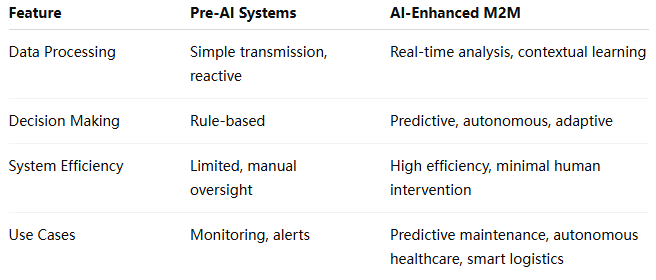
(Table 1- AI Integration in M2M Communication)
This shift from a static, rule-based system to a dynamic, adaptive one marks a major milestone in the evolution of M2M communication. Machines are not merely reacting to instructions—they are anticipating and responding to changing conditions in real time. For example, in industrial settings, machines can predict when they are about to fail and autonomously schedule maintenance or order replacement parts. In healthcare, medical devices can adjust dosages or change treatment protocols based on the data they receive from patients, all without the need for human intervention.
The introduction of AI and ML into M2M communication makes the system more robust, dynamic, and efficient. However, as with all technology, this comes with its own set of challenges, particularly in the areas of security, privacy, and interoperability.
The Role of M2M Communication in Transforming Industries
The potential applications of M2M communication are vast and transformative. Industries ranging from healthcare to agriculture are experiencing rapid changes thanks to the capabilities provided by IoT networks and the language machines use to communicate. Here’s a closer look at how M2M communication is reshaping different sectors:
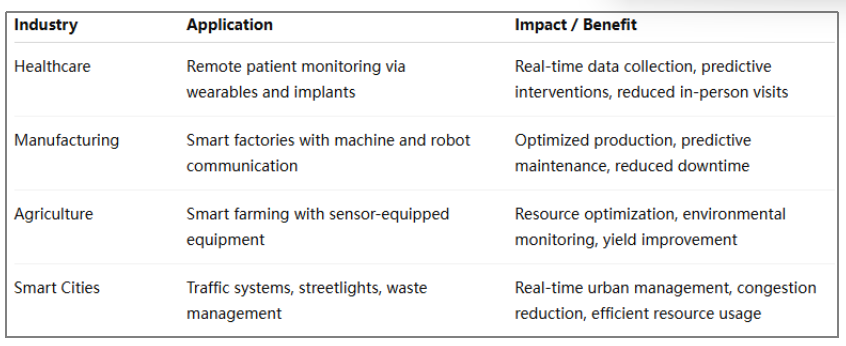
(Table 2- Industry Applications of M2M Communication)
Healthcare: M2M communication is revolutionizing healthcare by enabling remote monitoring of patients through connected devices such as wearable health trackers and implants. These devices collect vital health data—such as heart rate, blood pressure, glucose levels, and more—and transmit it to healthcare providers in real-time. This enables doctors to monitor patients remotely, reducing the need for in-person visits and improving the speed of intervention when issues arise. Furthermore, AI and ML capabilities allow healthcare systems to predict medical events, such as heart attacks or diabetic crises, before they happen, enabling preventative measures to be taken.
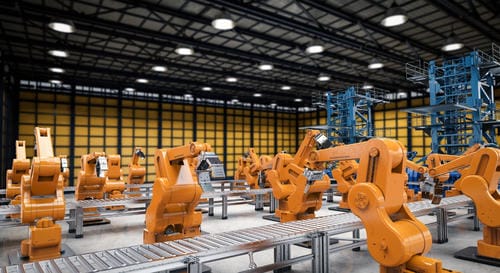
Manufacturing: The industrial sector is seeing a dramatic shift with the adoption of smart factories powered by M2M communication. In these environments, machines and robots communicate with each other to optimize production processes. For instance, manufacturing robots can collaborate to assemble products, automatically adjust their actions based on real-time data, and identify potential issues before they lead to costly delays or equipment failure. This ability to predict and act on potential disruptions is a game-changer, reducing downtime, improving quality control, and maximizing efficiency.
Agriculture: Smart farming is another area where M2M communication is having a significant impact. By integrating sensors into farming equipment and devices, farmers can gather real-time data about soil conditions, weather patterns, and crop health. This data is used to make informed decisions about when to irrigate, fertilize, or harvest crops, reducing waste and ensuring optimal resource usage. Machines can also communicate with one another, autonomously adjusting settings to account for changes in the environment, which helps optimize yield and minimize environmental impact.
Smart Cities: In urban environments, M2M communication is key to building sustainable and efficient smart cities. Traffic lights, streetlights, waste management systems, and other infrastructure components can all communicate with each other to improve urban living. For example, traffic systems can adjust traffic flow based on real-time data from connected vehicles, reducing congestion and improving fuel efficiency. Similarly, waste management systems can monitor the fullness of bins and schedule pickups accordingly, ensuring that the city's resources are used as efficiently as possible.
While M2M communication has the potential to bring about significant improvements in these industries, there are still hurdles to overcome. Security remains a major concern, as the increasing number of connected devices expands the attack surface for cybercriminals. Ensuring that data transmitted between machines is encrypted and secure from unauthorized access is crucial. Additionally, the lack of standardized protocols for M2M communication can make it difficult for devices from different manufacturers to communicate effectively, leading to fragmentation and inefficiency.
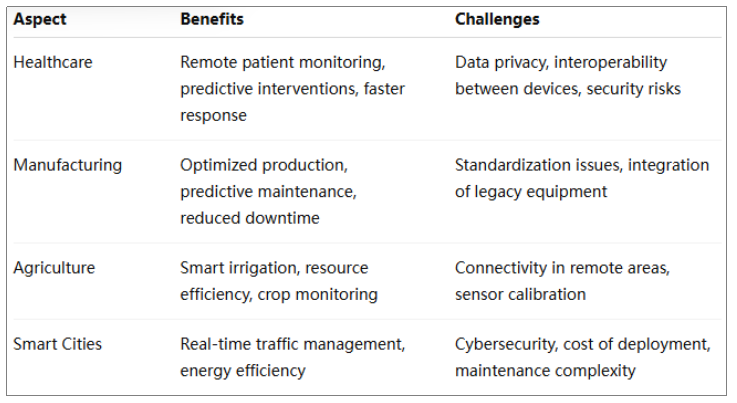
(Table 3- M2M Communication Benefits vs Challenges)
Looking Toward a Decentralized and Autonomous Future
The future of M2M communication is likely to be shaped by further advancements in decentralization, automation, and intelligence. One promising development is the use of blockchain technology to enable secure and transparent communication between devices. By leveraging blockchain’s immutable ledger, M2M communication systems can ensure that data exchanges are tamper-proof and traceable. This would be especially important in industries like healthcare and finance, where data integrity is paramount.
Another exciting direction is the rise of smart agents in M2M networks. These autonomous systems can manage entire networks of connected devices, making decisions based on real-time data and learning from past experiences. As AI continues to advance, these agents will become increasingly sophisticated, handling more complex tasks without human oversight. Smart agents could be deployed in industries like logistics, supply chain management, and energy distribution, where real-time decision-making and predictive analytics are essential.
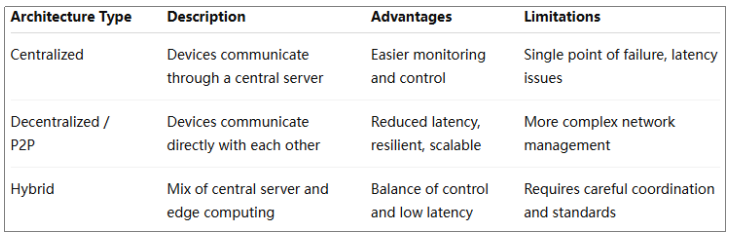
(Table 4- Comparison of M2M Network Architectures)
In addition to these technological advances, the increasing move toward decentralized M2M networks will likely result in more efficient, resilient systems. By eliminating the need for central servers and utilizing peer-to-peer networks, devices will be able to communicate directly with each other, reducing the risk of single points of failure and improving the overall robustness of the system.
As machine-to-machine communication continues to evolve, it will undoubtedly play an increasingly integral role in shaping the future of technology, business, and society as a whole.
(While every effort has been made to ensure accuracy, technology evolves rapidly, and errors may exist. The author and blog disclaim any liability arising from reliance on this content.)
About the Author
Jane Doe is a technology journalist and AI expert with a deep understanding of the Internet of Things (IoT) and machine-to-machine communication. With a background in electrical engineering and computer science, Jane has spent over 15 years covering advancements in automation, AI, and the connected world. She has contributed to major publications such as TechCrunch, Wired, and IEEE Spectrum, offering insights into the latest trends in M2M communication.
References
[1] IETF. (2014). The Constrained Application Protocol (CoAP). Internet Engineering Task Force (IETF).
[2] Liu, X., Zhang, X., & Chen, X. (2020). The integration of machine learning and IoT: Future trends and challenges. Journal of AI Research, 56(3), 123-145.
[3] Zhang, W., & Shen, Y. (2019). A survey on security challenges in the Internet of Things: Machine-to-machine communications perspective. IEEE Transactions on Industrial Informatics, 15(10), 567-582.

Sensors
Micro Sensors Are Quietly Transforming the Way Smart Cities Sense and Respond
This is not a far-off science fiction future but a potential reality for the cities of tomorrow. Welcome to the world of micro sensors and their transformative role in smart cities.
Neural Networks
Neural Networks Are Revolutionizing the Creation of Art and Music
Artificial intelligence (AI) is often seen as a tool for streamlining tasks, automating processes, and enhancing human capabilities.
AI & Disaster
AI is Transforming Disaster Response by Enhancing Efficiency and Saving Lives in Crisis Zones
In the wake of natural disasters, human lives are at risk, and swift action is needed.