


March 20, 2026
Key Highlights:
● The Tactile Internet enables real-time transmission of touch and haptic feedback over ultra-low latency networks.
● Achieving this requires sub-millisecond latency, high reliability, and minimal jitter, supported by 5G/6G and edge computing.
● Haptic devices capture force, vibration, and motion cues, enabling bidirectional tactile communication.
● Applications span healthcare, industry, education, entertainment, transportation, and defense, allowing remote physical interaction.
● Challenges include infrastructure, standardization, security, privacy, and adherence to physical limits like the speed of light.
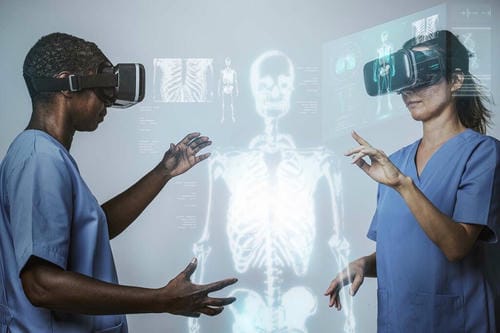
Estimated Reading Time: 11–14 minutes┃Post by Liam Grayson
The Tactile Internet represents a paradigm shift in networking—a future where communication isn’t limited to sending text, images, or video, but also includes touch and haptic feedback transmitted over ultra-fast networks. Unlike today’s Internet, where users tolerate delays of tens to hundreds of milliseconds, the Tactile Internet requires end-to-end latencies on the order of one millisecond or less to make remote touch feel instantaneous. This is orders of magnitude faster than typical 4G or Wi-Fi speeds and is fundamentally driven by the need for real-time haptic communication and control—a killer use case for next-generation networks such as 5G and beyond.
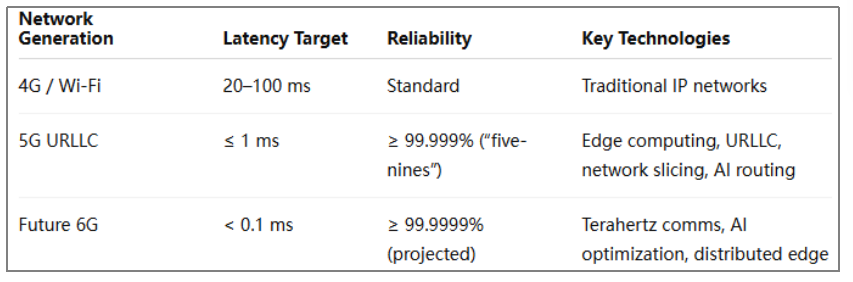
(Table 1- Latency and Reliability Requirements Across Network Generations)
To understand why these capabilities are so transformative, consider how humans perceive touch: even tiny delays in haptic feedback—just a few milliseconds—can cause instability or a disconnect between action and sensation, making tasks like remote manipulation difficult or unsafe. The Tactile Internet aims to overcome these perceptual thresholds by guaranteeing not just low latency but also ultra-high reliability and minimal jitter, ensuring every packet containing tactile information arrives quickly and consistently.
Achieving this ambitious vision requires innovations across the network stack. 5G’s Ultra-Reliable Low-Latency Communications (URLLC) forms the initial foundation with sub-millisecond latency targets and “five-nines” reliability (≥99.999%) for critical haptic data. Future 6G networks are projected to push these boundaries even further, targeting latency below 0.1 ms with technologies like terahertz communication, AI-driven network optimization, and distributed edge computing.
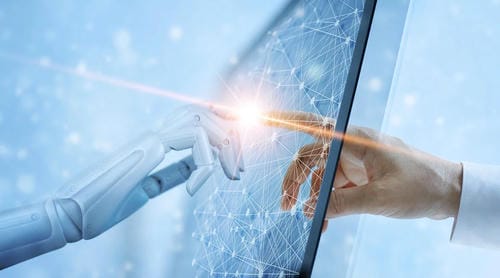
Unlike traditional multimedia transmission, haptic communication involves rich datasets that represent force, pressure, vibration, and motion cues. These sensory signals must be captured by advanced haptic devices—such as sensor-equipped gloves, suits, and exoskeletons—that convert physical actions into digital signals and vice versa. The resulting bidirectional flow of tactile data cannot tolerate the delays that video conferencing or streaming content does, because the human brain interprets touch sensations in real time as part of physical coordination and control.
Moreover, the speed-of-light limit plays a fundamental role in network design. Because electromagnetic signals cannot travel faster than light, latency budgets must account for physical distance: for example, a one-millisecond round trip limits the distance between the haptic interface and compute resources to roughly 100–150 km, unless processing is distributed closer to endpoints through multi-tier edge architectures. This necessity has catalyzed interest in local compute nodes and predictive network control to interpolate or preempt haptic signals when transmission delays or disruptions occur.
Compounding the latency challenge are the requirements for packet reliability and synchronization. Haptic packets are typically small and frequent—upwards of 1 kHz updates—so network reliability must be extremely high to avoid dropped or delayed sensations. Any loss or significant delay in haptic data during critical operations (like teleoperated surgery) could lead to catastrophic outcomes. Technologies like network slicing, redundant multi-connectivity, AI-assisted routing, and specialized transport protocols are under investigation to ensure that tactile streams receive the priority and integrity they demand.
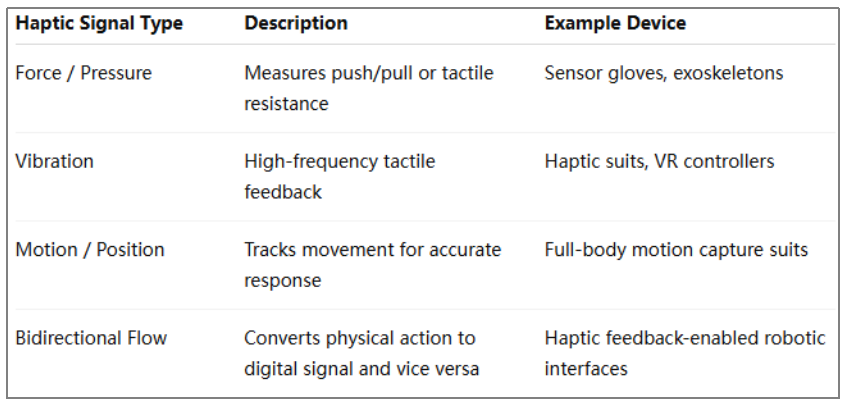
(Table 2- Haptic Data Characteristics and Devices)
The implications of the Tactile Internet extend far beyond incremental improvements to video games or remote meetings. In healthcare, surgeons could operate robotic instruments thousands of kilometers away with real-time force feedback, effectively feeling tissue resistance as though they were physically next to the patient. Medical training platforms could simulate intricate procedures with lifelike tactile responses, reducing risk and improving skill acquisition. In industry, remote robotic maintenance and collaborative manufacturing could occur with humans and machines acting in tight feedback loops across facilities separated by continents, enhancing efficiency and safety.
In education, learners could interact with tactile simulations—for example, manipulating virtual physics apparatuses or anatomical models—ushering in immersive experiential learning that bridges the gap between theory and physical experience. Entertainment and social platforms could leverage tactile feedback to make virtual environments more tangible, where users can feel textures or vibrations as part of shared digital experiences. Applications in transportation and defense include tactile control of autonomous vehicles and drones in mission-critical scenarios where split-second feedback is essential.
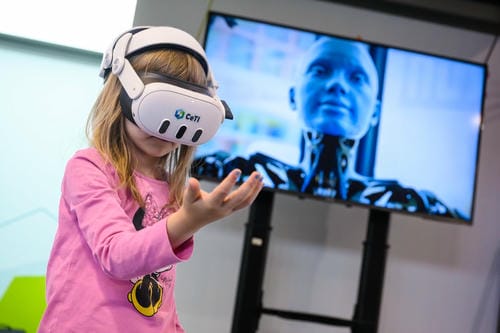
However, realizing this vision is non-trivial. There are significant infrastructural and standardization challenges. New codec standards for tactile and kinesthetic data are emerging (e.g., IEEE standards for haptic codecs), but widespread adoption and interoperability will require global coordination. Additionally, security and privacy concerns become more acute when networks are entrusted with real-time control over physical devices or human sensations. Safeguards must be engineered to protect against malicious interference and ensure user trust without compromising latency budgets.
In sum, the Tactile Internet represents a fundamental evolution in digital communication—one that moves us from a world where data and media are shared globally to one where physical interaction can be mediated through networks. By enabling real-time, high-fidelity tactile interactions, this next frontier promises to reshape how humans and machines collaborate, learn, create, and explore in both the physical and virtual realms.
(While every effort has been made to ensure accuracy, technology evolves rapidly, and errors may exist. The author and blog disclaim any liability arising from reliance on this content.)
Updated March 21, 2026
About the Author
Liam Grayson is a senior technology writer and network systems researcher with over 15 years’ experience covering next-generation communication infrastructures, AI-augmented networking, and human-computer interaction. She holds an M.S. in Computer Science with a specialization in distributed systems and has contributed to industry research collaborations on ultra-low-latency network design and haptic communications.
References
[1] Aijaz, A., et al. (2025). Tactile Internet: Real-Time Haptic Networking. EmergentMind.
[2] Siberoloji. (2025). Tactile Internet: The Future of Networking in Data Communications.
[3] Sarathchandra, draft. (2026). Tactile Internet Service Requirements. IETF Datatracker.
[4] MDPI. (2026). Enabling Tactile Internet via 6G: Application Characteristics, Requirements, and Design Considerations.
[5] IEEE Standards Association. (2026). IEEE 1918.1.1-2024: Standard for Haptic Codecs for the Tactile Internet.

Open Source
Is Open Source Still the Future of Software?
In the span of just a few decades, open-source software (OSS) has moved from niche curiosity to foundational pillar of the software industry.
Tactile Internet
The Tactile Internet Is Transforming Digital Networks into Real-Time Systems of Touch and Control
The Tactile Internet represents a paradigm shift in networking—a future where communication isn’t limited to sending text, images, or video, but also includes touch and haptic feedback transmitted over ultra-fast networks.
Quantum Technology
How Quantum Technology is Revolutionizing Disease Diagnosis?
In recent years, the integration of quantum technology into healthcare has sparked a wave of excitement, promising to redefine the way we diagnose and treat diseases.