


March 22, 2026
In this Article:
● Quantum computing can enhance medical imaging and simulations, enabling earlier and more accurate disease detection.
● Quantum sensors offer unprecedented precision for detecting biomarkers and early signs of diseases like cancer or Alzheimer’s.
● Quantum imaging techniques push the resolution limits of traditional imaging, improving diagnosis of neurological and other conditions.
Estimated Reading Time: 11–13 minutes┃Post by Elena Johnson
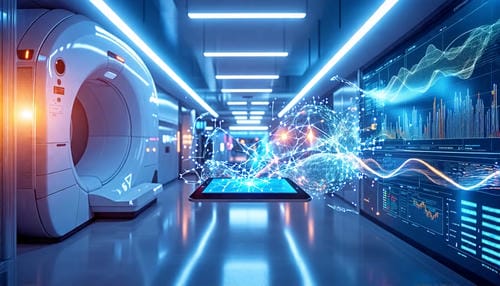
In recent years, the integration of quantum technology into healthcare has sparked a wave of excitement, promising to redefine the way we diagnose and treat diseases. While quantum mechanics has historically been confined to the realms of theoretical physics, it is now making its way into practical applications with the potential to revolutionize the medical field. Quantum computing, quantum sensors, and quantum-enhanced imaging are just a few of the innovations poised to significantly impact disease diagnosis. These breakthroughs could not only make diagnostic tools faster and more accurate but could also enable doctors to detect diseases at earlier, more treatable stages.
Quantum Computing: The Brain of Tomorrow’s Diagnostics
At the core of the quantum revolution in medicine is quantum computing, which leverages the principles of quantum mechanics to process information in ways classical computers cannot.

(Table 1- Quantum Technologies in Healthcare)
Unlike classical bits, which can be either a 0 or a 1, quantum bits (qubits) can exist in multiple states simultaneously, thanks to the phenomena of superposition and entanglement. This ability to process vast amounts of data in parallel makes quantum computing particularly suited for complex tasks like drug discovery and medical imaging.
In medical diagnostics, one of the most promising applications of quantum computing is in the realm of imaging and simulations. Traditional medical imaging techniques, such as MRI and CT scans, rely on classical computing power to reconstruct images from raw data. While these techniques are effective, they often have limitations in terms of resolution, speed, and the ability to analyze large datasets quickly. Quantum computers, with their enhanced processing power, could potentially overcome these limitations, enabling doctors to gain deeper insights into the body’s inner workings.
For example, quantum computing could improve magnetic resonance imaging (MRI) by allowing for more precise measurements of molecular structures, thus providing clearer images of tissues and organs at a microscopic level. This would not only make it easier to identify tumors or lesions, but it could also help doctors detect diseases earlier, when they are more treatable.
Quantum Sensors: A Leap in Precision
Another area where quantum technology is making an impact is in quantum sensors. These sensors harness quantum properties like superposition and entanglement to achieve extraordinary sensitivity and accuracy. Unlike traditional sensors, which measure physical quantities like temperature, pressure, or magnetic fields, quantum sensors can detect even the smallest changes in these quantities, enabling unprecedented precision.
In medical diagnostics, quantum sensors are being used to detect biological markers and diseases at the earliest stages. For instance, quantum-based sensors could be used to detect trace amounts of biomarkers in blood or urine that indicate the presence of disease. These sensors could revolutionize the early detection of conditions such as cancer, Alzheimer’s disease, or cardiovascular problems, long before they are detectable using traditional methods.
One promising example is the development of quantum-based sensors for detecting cancer. These sensors could detect the early presence of cancer cells by measuring changes in the magnetic fields or the electrical activity of cells.
(Table 2- Potential Benefits of Quantum-Enhanced Diagnostics)
Since cancer is often most treatable when caught early, this technology could save countless lives by enabling more timely interventions.
Quantum Imaging: Pushing the Boundaries of Detection
Quantum imaging techniques are another breakthrough that holds great promise in disease diagnosis. Conventional imaging technologies, while effective, have limitations in their resolution and ability to capture fine details. Quantum imaging aims to push these boundaries by using quantum states of light and other quantum properties to produce images with significantly higher resolution.
One key area where quantum imaging is making waves is in the diagnosis of neurological disorders, such as Alzheimer’s disease or Parkinson’s disease. These conditions often involve subtle changes in brain activity or the buildup of toxic proteins, which may not be visible using traditional imaging techniques. By using quantum-enhanced imaging methods, researchers hope to develop tools that can detect these conditions at their earliest stages, allowing for more effective treatments and interventions.
For example, quantum-enhanced optical imaging could help detect early signs of neurodegeneration by observing changes in the brain's molecular structure. This would allow healthcare professionals to intervene before the disease has progressed to a stage where symptoms become irreversible.
The Role of Quantum Machine Learning in Medicine
As quantum computing advances, its combination with machine learning is opening up new frontiers in the analysis of complex medical data. Quantum machine learning (QML) combines the computational power of quantum computers with the data analysis capabilities of machine learning algorithms, creating a powerful tool for interpreting large datasets quickly and accurately.
In the realm of disease diagnosis, QML can analyze vast amounts of patient data, from genetic information to medical imaging, to identify patterns and correlations that might be missed by traditional methods. By processing this data with quantum-enhanced machine learning algorithms, doctors could receive faster and more accurate diagnoses, particularly in complex cases where multiple factors are at play.
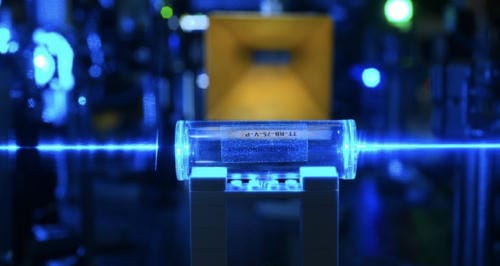
For instance, QML could be used to analyze genetic data and identify mutations that are linked to specific diseases. This could lead to personalized medicine, where treatments are tailored to an individual’s genetic makeup. Additionally, QML could enhance predictive models for disease progression, helping doctors forecast how a patient’s condition will evolve over time.
Despite the promising potential of quantum-driven medicine, there are still significant challenges to overcome before these technologies can be widely adopted in clinical practice. One of the primary obstacles is the current limitations of quantum hardware. Quantum computers and sensors are still in their infancy, and scaling these devices for practical use in medicine will require significant advances in both hardware and software.
(Table 3- Challenges to Adoption of Quantum Medicine)
Another challenge is the need for highly specialized expertise to work with quantum technologies. Medical professionals will need to be trained in quantum concepts to fully leverage these innovations in their practice. Furthermore, the integration of quantum technology into existing healthcare systems will require significant investment in infrastructure and the development of new regulatory frameworks.
Lastly, the ethical implications of using quantum technology in healthcare must be carefully considered. As quantum sensors and imaging systems become more advanced, they may raise questions about patient privacy, data security, and the potential for misuse. Ensuring that these technologies are used responsibly will be critical to their success in the medical field.
The rise of quantum-driven medicine is a transformative development that promises to revolutionize how we diagnose and treat diseases. From quantum computing to quantum sensors and imaging, these innovations have the potential to enhance the accuracy, speed, and precision of medical diagnostics, ultimately saving lives and improving patient outcomes. While there are still challenges to overcome, the future of quantum technology in healthcare looks incredibly promising, offering a glimpse of a new era in medicine where disease diagnosis is faster, more precise, and more personalized than ever before.
(This article is for informational purposes only and does not constitute medical or professional advice. The practical use of quantum technologies in healthcare is still under research and development, and clinical application should follow regulatory standards and ethical guidelines.)
Updated April 2, 2026
About the Author
Dr. Elena Johnson is a leading expert in quantum computing and its applications in healthcare. With over 15 years of experience in the field, she has worked with both academic institutions and tech startups to advance the integration of quantum technologies in medical diagnostics. Dr. Johnson holds a Ph.D. in Quantum Physics from MIT and has authored several papers on the intersection of quantum mechanics and healthcare. Her work has been recognized globally, and she is passionate about the transformative potential of quantum technologies in improving patient care and outcomes.
References
[1] Rieffel, E. G., & Polak, W. (2011). Quantum Computing: A Gentle Introduction. MIT Press.
[2] McMahon, P. L., & Baugh, J. (2018). Quantum Computing for the Physicist: A Primer for Students and Engineers. Springer.
[3] Mohr, S. (2020). Quantum Sensors and Their Applications in Medicine. Journal of Quantum Science, 22(4), 121-134.
Digital Distractions
Calm Technology Redefines How We Engage with Digital Distractions
The major platforms and ecosystems of modern tech—from social media feeds to messaging apps—are built to capture and hold your focus as long as possible.
AR
Augmented Reality Transforms Education by Enhancing Cognitive Learning Beyond Gamification
Augmented Reality (AR) has been widely discussed in educational technology circles as a tool to inject engagement and fun into learning, often through gamification.
Sensors
Micro Sensors Are Quietly Transforming the Way Smart Cities Sense and Respond
This is not a far-off science fiction future but a potential reality for the cities of tomorrow. Welcome to the world of micro sensors and their transformative role in smart cities.