


March 6, 2026
Key Highlights:
● Augmented Reality (AR) in education is moving beyond gamification, focusing on cognitive enhancement rather than just engagement.
● AR supports multisensory learning, helping students visualize and manipulate complex concepts in 3D, improving retention and mental model formation.
● Cognitive benefits include reduced extraneous load, improved knowledge transfer, and strengthened embodied cognition through physical interaction with content.
● Beyond classrooms, AR aids lifelong learning, vocational training, and informal educational experiences by enhancing spatial reasoning, problem-solving, and contextual understanding.
Estimated Reading Time: 12–14 minutes┃Post by Dylan Hayes
Augmented Reality (AR) has been widely discussed in educational technology circles as a tool to inject engagement and fun into learning, often through gamification. Yet as AR hardware and software mature, its value in education increasingly hinges on deeper cognitive outcomes rather than just game-like excitement. AR now stands at a point where it can meaningfully influence how students think, reason, and understand complex concepts—not merely how entertained they are while learning.
Traditionally, AR’s integration into the classroom has been synonymous with gamified experiences that boost attention and motivate learners through interactive overlays and challenges. These experiences do increase engagement, and educators have long celebrated the ability of AR to make learning feel more immersive than textbooks or slides ever could. In some reported cases, learners interacting with AR tools score higher on assessments than peers using conventional materials, suggesting a link between AR’s interactivity and better retention of information.
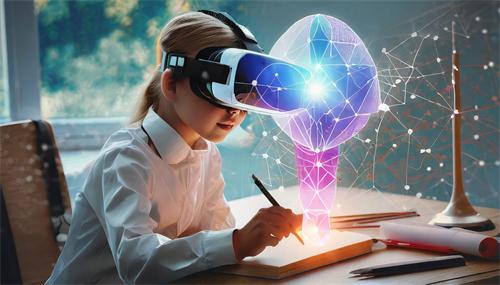
However, researchers argue that the true pedagogical promise of AR lies beyond gamification metrics and instead emerges when AR is used to support cognitive processes at a structural level. This means designing AR experiences that scaffold complex information, reduce unnecessary mental effort, and help learners build accurate mental models of abstract content. Such a focus positions AR as a cognitive enhancement platform—tools that do more than entertain; they enable learners to mentally manipulate information in ways previously impossible with 2D media alone.
Multisensory learning is a good example of this deeper potential. By engaging visual, auditory, and tactile channels simultaneously, AR makes abstract ideas concrete. For instance, spatially complex structures in biology or chemical reactions can be visualized and manipulated in 3D space, allowing learners to perceive relationships and processes that are difficult to convey with flat diagrams. These immersive visualizations anchor concepts more firmly in memory by linking them to tangible experiences.
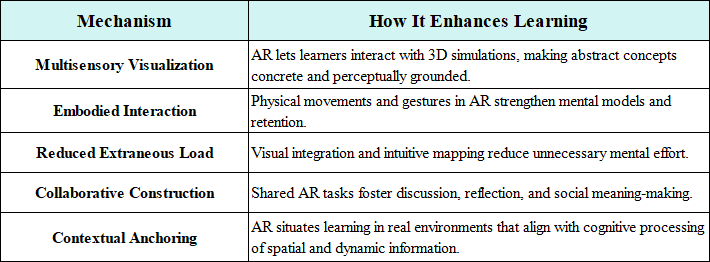
(Table 1- How AR Supports Cognitive Learning)
Cognitive Enhancement Through Immersive Interaction
At the heart of AR’s educational promise is its capacity to transform cognition—the processes of acquisition, retention, and application of knowledge. Engagement is a necessary first step, but cognitive enhancement requires careful instructional design that leverages AR’s strengths. Studies show that AR interventions can lead to significant improvements in learning outcomes when compared to traditional instruction.
One recent mixed-method study found statistically significant differences in performance measures for students who used AR versus those who did not. Learners in the AR group not only performed better on tests, they also reported higher engagement and collaborative experiences during activities. In this study, beyond entertainment, AR supported deeper processing: it encouraged students to discuss, reflect, and engage meaningfully with material, fostering social learning and problem-solving skills not easily replicated through textbooks alone.
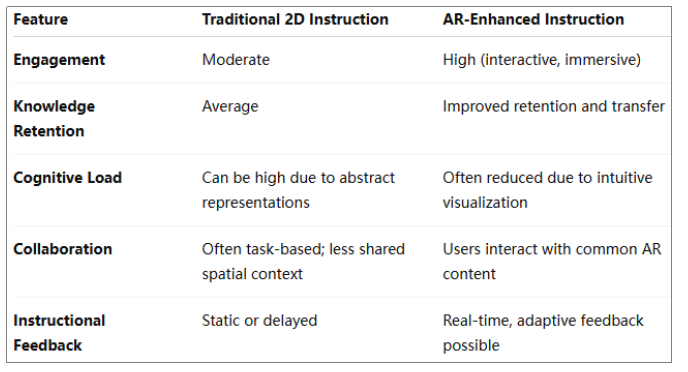
(Table 3 — Comparisons: AR vs Traditional Instruction)
Further research highlights how AR can reduce extraneous cognitive load—the unnecessary mental effort that distracts from real learning. By presenting information in intuitive, spatially consistent ways that align with how our brains naturally process sensory input, AR helps direct cognitive resources toward germane processing—the type of thinking that leads to deeper understanding and conceptual mastery. In one case involving neuroanatomy learning, students using AR to interact with 3D models showed reduced cognitive load and improved knowledge transfer compared to learners using only traditional materials, illustrating how AR can make mental effort more efficient.
In science education, AR’s influence on embodied cognition—where learning involves sensorimotor activity linked to concepts—also shows promise. Viewing dynamic simulations through AR enables students to engage physically with scientific ideas, linking gestures and motion to content comprehension. This embodiment fosters deeper internalization of scientific concepts because the learning process aligns with how human cognition naturally constructs understanding through action and perception.
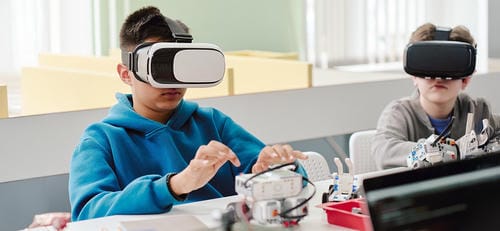
Moreover, AR’s capacity to customize learning experiences supports individualized pathways through complex content. Adaptive guidance systems within AR environments can tailor instruction to the learner’s current understanding, providing just-in-time feedback and targeted prompts. These systems help learners navigate challenges without overwhelming them with irrelevant information, thereby enhancing efficiency and retention. While research in this area is still emerging, early evidence suggests that such adaptive AR aids can significantly bolster learner agency and performance when compared with static instruction models.
Beyond Schools: AR as a Cognitive Tool for Lifelong Learning
The potential of AR as a cognitive enhancer isn’t confined to K-12 or university classrooms. Its ability to support spatial reasoning, problem-solving, and contextual understanding has implications for adult education, vocational training, and informal learning environments such as museums or professional development workshops.
For instance, AR wayfinding systems designed for older learners have shown improvements in spatial navigation and cognitive mapping skills, illustrating how AR can support cognitive functions beyond academic domains. These findings hint at broader applications where AR can be strategically deployed to train reasoning and memory skills in varied populations.
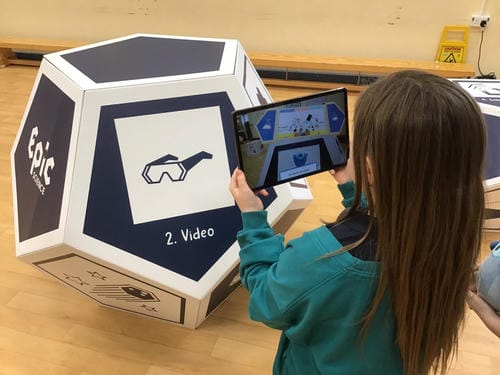
In informal learning settings, AR’s role in guided discovery fosters curiosity and inquiry, encouraging learners to pose questions, test hypotheses, and explore authentic environments with virtual layers of information. By situating learning within real contexts rather than abstract classrooms, AR bridges theory and practice—helping learners form meaningful connections between knowledge and lived experience.
Yet, alongside these promises, the research also underscores the need for thoughtful design and implementation. Challenges such as managing cognitive load, ensuring usability, and aligning AR content with pedagogical goals remain key areas for improvement. Poorly designed AR experiences can inadvertently hinder learning by overwhelming learners with dense overlays or distracting animations. Consequently, instructional designers and educators must collaborate closely to craft AR applications that enhance cognition without sacrificing clarity or focus.
As AR hardware becomes more accessible and development tools more sophisticated, the next wave of educational innovation lies not in simply gamifying lessons but in deploying AR in ways that reshape how we think. By focusing on cognitive enhancement—through multimodal interaction, adaptive feedback, and embodied learning—educators can harness AR’s full potential to support deeper understanding, critical thinking, and long-term mastery across disciplines.
FAQs
1. Can AR reduce cognitive overload during learning?
Yes. Research indicates that AR can present complex information in spatially integrated and intuitive ways, helping learners allocate cognitive resources to meaningful processing rather than unnecessary mental effort — effectively reducing extraneous cognitive load when instruction is well designed.
2. Is AR shown to improve long‑term retention and transfer of learning?
Systematic reviews indicate that AR enhances knowledge acquisition and retention in many contexts when aligned with pedagogical goals. For example, students using AR in STEAM subjects often learn more deeply and retain information longer than through traditional instruction — but effects vary with design quality, content relevance, and instructional integration.
3. How does AR compare with other immersive technologies like Virtual Reality (VR)?
Unlike VR, which fully immerses learners in a virtual environment, AR augments the real world, preserving situational awareness and facilitating interaction with both physical and virtual elements. Studies indicate that AR’s blended nature often supports contextualized learning more effectively while maintaining comfort and usability.
(While every effort has been made to ensure accuracy, technology evolves rapidly, and errors may exist. The author and blog disclaim any liability arising from reliance on this content.)
Updated March 20, 2026
About the Author
Dylan Hayes is an educational technology strategist and writer specializing in immersive learning innovations. With over a decade in instructional design and research, she has collaborated with schools, universities, and EdTech startups to integrate emerging technologies. Alexandra holds a Master’s in Learning Sciences and Technology from a leading research university and regularly contributes to journals and conferences on AR, cognitive learning, and digital pedagogy.
References
[1]: Augmented Reality in Education: The Future of Interactive Learning. (2025). Hello.ar.
[2]: Xin Tian & Ironsi, C. S. (2025). Examining the impact of augmented reality on students’ learning outcomes. Scientific Reports, 15.
[3]: A Narrative Review on Augmented Reality in Education. (2026). MDPI.
[4]: Soni, et al. (2024). Embodied learning of science concepts through augmented reality technology. Education and Information Technologies.

Battery
Living Batteries and Organic Power Sources Are Shaping the Future of Sustainable Energy
The search for sustainable, eco-friendly energy solutions has led researchers to consider some unconventional sources of power—biological systems.
Edge Computing
Real-Time Worlds Powered by Edge Computing Transform the Metaverse Beyond VR
The “metaverse” is often discussed in terms of virtual reality (VR) headsets and immersive graphics, but at its core, this next-generation digital realm is a massive distributed computing challenge that extends far beyond display hardware.
Drones and Satellites
How Drones and Satellites Will Power the Next Internet?
As digital demand intensifies—with billions of connected devices, autonomous systems, and real-time AI workloads—the structural limits of ground-based networks are becoming clear.