


March 16, 2026
Aerial computing—combining satellites, drones, and high-altitude platforms—promises to redefine the Internet by delivering ubiquitous connectivity, edge computing, and unprecedented flexibility across ground, air, and space.
Estimated Reading Time: 11–13 minutes┃Post by Chloe Westbrook
The evolution of global communication infrastructure is entering a transformative era. As digital demand intensifies—with billions of connected devices, autonomous systems, and real-time AI workloads—the structural limits of ground-based networks are becoming clear. Terrestrial systems excel in dense urban corridors, but they struggle with coverage gaps, latency constraints, and the escalating compute demands at the network’s edge. Aerial computing—a convergence of drones, high-altitude platforms, and satellites—promises to reshape the architecture of the Internet itself by extending network connectivity and compute services into the sky and space.
Historically, Internet infrastructure has been anchored to the Earth: fiber-optic backbones, cellular towers, and fixed radio links. While powerful, these systems have built-in limitations. Deploying terrestrial networks in remote, rugged, or economically challenging regions often entails prohibitive costs and lengthy rollouts. Meanwhile, latency-sensitive applications—such as real-time sensing, autonomous navigation, and augmented reality—demand computation closer to the access layer, which traditional networks cannot always satisfy efficiently.
Aerial computing reframes this paradigm by embedding connectivity and computation into airborne and spaceborne infrastructures. Rather than relying solely on static, fixed ground assets, networks can now leverage low Earth orbit (LEO) satellites, high-altitude platforms (HAPs), and unmanned aerial vehicles (UAVs or drones) as dynamic nodes in a three-dimensional network architecture spanning the ground, the air, and space. This layered approach is central to space-air-ground integrated networks (SAGINs)—the emergent framework for future 6G systems that seeks to deliver ubiquitous, resilient connectivity across geographic and environmental boundaries.
1. Understanding Aerial Computing’s Core Components
To appreciate aerial computing’s potential, it is important to unpack the roles played by its constituent technologies.
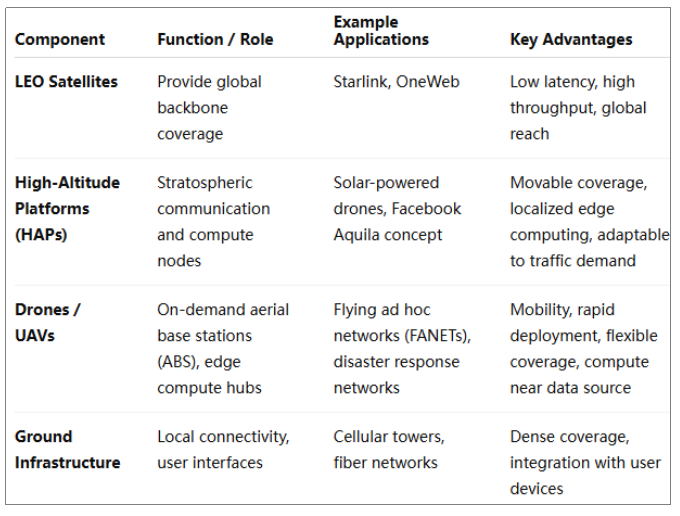
(Table 1- Core Aerial Computing Components and Roles)
1.1 Low Earth Orbit Satellites: Global Coverage with Reduced Latency
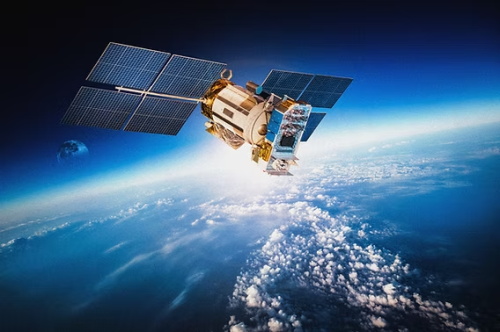
LEO satellites operate at altitudes significantly lower than traditional geostationary satellites, enabling lower latency and higher throughput connectivity. Networks built from these constellations—such as Starlink, OneWeb, and emerging commercial deployments—are enabling broadband speeds and global coverage that were previously unattainable without extensive ground infrastructure. These satellites form the highest tier of aerial computing architectures, providing a backbone that can reach virtually every point on the planet.
Recent advancements show the trajectory of this technology evolving toward active in-orbit networking. For example, integrating optical laser links between satellites can enable persistent, high-speed data paths—empowering satellites not just as passive relays but as active nodes supporting edge processing in space itself.
1.2 Aerial Platforms: Drones and High-Altitude Systems
Between the ground and space lies the stratospheric layer, where drones and HAPs operate with strategic flexibility. These aerial systems carry communication payloads, antennas, and compute resources, effectively acting as movable base stations or localized network hubs.
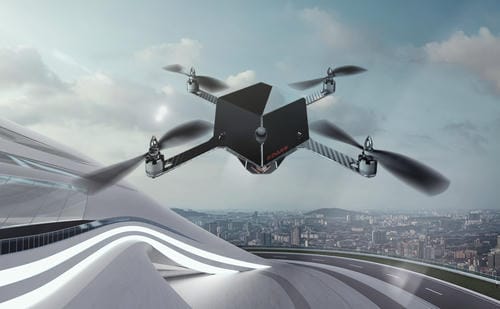
Drones outfitted with communications radios can establish aerial base stations (ABS) that support on-demand wireless coverage. The key advantage here is mobility: ABS platforms can reposition based on real-time traffic demands or areas of infrastructure failure, overcoming the rigidity of fixed cell towers. Their ability to form flying ad hoc networks (FANETs)—similar to mobile ad hoc networks (MANETs) but in three-dimensional space—enables adaptive connectivity patterns tailored to the environment and service needs.
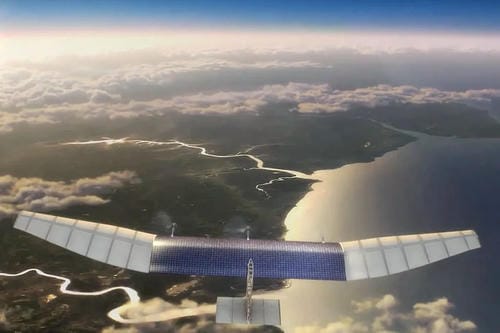
Early experiments with atmospheric satellites, such as Facebook’s Aquila project, showed how solar-powered drones can be conceptualized as high-altitude relays that deliver broadband coverage across wide radii—demonstrating the feasibility of non-terrestrial broadband solutions for underserved populations.
2. Layered Integration: The SAGIN Vision
The real power of aerial computing arises not from individual technologies operating in isolation, but from their integration into a cooperative, hierarchical ecosystem that spans ground, air, and space domains. This integrated network architecture is at the heart of upcoming 6G visions.
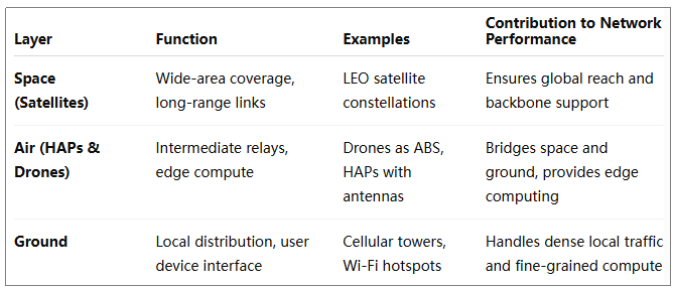
(Table 2- SAGIN Layered Architecture and Functions)
In a typical SAGIN ecosystem:
● Satellites provide wide-area backbone coverage and long-range links.
● Aerial platforms (drones and HAPs) offer intermediate relays, localized connectivity, and edge compute capabilities closer to users.
● Ground infrastructure manages localized distribution and interfaces with end-user devices.
This layered construct ensures that each segment complements the limitations of the others: satellites ensure coverage across broad geographical footprints, aerial platforms bridge the gap between space and terrain, and ground nodes handle dense, hyperlocal connectivity and compute tasks.
Aerial computing is not merely about connectivity—it is also about distributed computation. Traditionally, network service architectures have placed compute power in centralized data centers. This model fails to address latency-sensitive applications efficiently, especially for devices located far from these data centers.
By embedding compute modules within aerial nodes, networks can process data closer to where it is generated. Drones and HAPs can act as edge computing hubs, handling tasks that require rapid processing (e.g., real-time analytics for sensor networks or mission-critical decision support) without round-trip delays to central servers. Research into UAV-enhanced networks underscores this role, emphasizing the necessity of advanced resource allocation, mobility-aware protocols, and optimized routing in heterogeneous aerial networking environments.
3. Technical and Operational Challenges
While aerial computing is compelling, its realization involves several complex challenges:
Integrating multiple layers of aerial, satellite, and terrestrial networks requires careful coordination of spectrum resources. Interference mitigation and dynamic resource allocation will be essential to ensure stable, high-throughput connections across heterogeneous links.
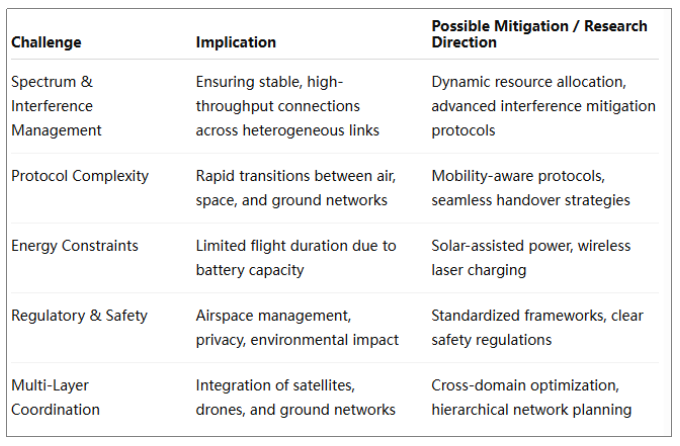
(Table 3- Key Technical and Operational Challenges of Aerial Computing)
The multi-layer nature of SAGINs demands protocols that can handle rapid shifts in connectivity patterns and frequent transitions between communication domains without disrupting service continuity.
Airborne platforms, particularly drones, face strict energy limitations due to payload weight and battery capacity. Advancing in-flight power solutions—such as wireless laser charging or solar-assisted platforms—is a key area of innovation aimed at extending mission duration and supporting compute payloads without frequent ground returns.
Deploying fleets of aerial computing platforms introduces regulatory and safety considerations. Airspace authorities must balance innovation with air traffic safety, privacy concerns, and environmental impacts. Clear frameworks and standards will be essential for large-scale integration of aerial networks into national and international airspace systems.
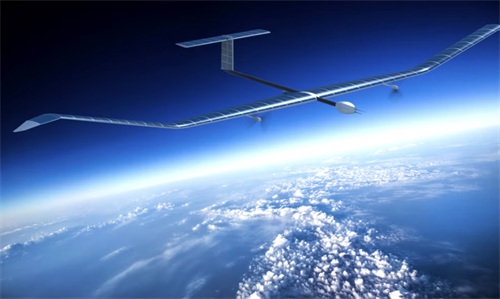
Aerial computing represents a significant shift in how global digital infrastructure is conceptualized, deployed, and operated. By weaving together satellites, aerial platforms, and ground networks, next-generation Internet systems will offer unprecedented coverage, flexibility, and computational proximity to connected devices.
Whether enabling ubiquitous broadband access, augmenting terrestrial networks in rural regions, or supporting latency-critical applications that require distributed compute power, aerial computing architectures will be foundational to the global Internet of the future. Achieving this vision will require coordinated advances in communication protocols, energy management, regulatory policy, and cross-domain integration.
As technology continues to mature and research communities focus on scalable, secure, and efficient implementations, the boundaries between ground, air, and space will dissolve—and with them, the limitations of the Internet as we know it.
(The views expressed in this article are solely those of the author and do not necessarily reflect the opinions of the blog or its partners. All information is provided for educational purposes and should be independently verified.)
Updated March 26, 2026
About the Author
Chloe Westbrook is a technology strategist and senior contributor at TechHorizons, where she focuses on next-generation networking, space-air-ground systems, and the future of global connectivity. Her work bridges the technical and policy dimensions of digital infrastructure, emphasizing equitable access and resilient systems. She holds a Master’s in Electrical Engineering from Stanford University with a specialization in wireless communications.
References
[1] How satellite & aerial networks will bring truly global 6G connectivity: LEO, HAPS, and AI-driven networks. (2025). SarathChandra.com blog.
[2] UAV communication in space–air–ground integrated networks (SAGINs): Technologies, applications, and challenges (2025). MDPI Drones.
[3] Integrated ground-air-space wireless networks for 6G mobile broadband connectivity. IEEE Communications Society.
[4] Service-oriented space-air-ground integrated networks: emerging architectures for ubiquitous connectivity (2025). IEEE Communications Society.

Touchless Computing
Touchless Computing is Revolutionizing User Experience with Gesture, Voice, and Sensor-Driven Interfaces
From the rise of renewable sources like solar and wind to the expansion of electric vehicles, the industry is embracing new technologies to reduce reliance on fossil fuels and promote sustainability.
Digital Distractions
Calm Technology Redefines How We Engage with Digital Distractions
The major platforms and ecosystems of modern tech—from social media feeds to messaging apps—are built to capture and hold your focus as long as possible.
Sensors
Micro Sensors Are Quietly Transforming the Way Smart Cities Sense and Respond
This is not a far-off science fiction future but a potential reality for the cities of tomorrow. Welcome to the world of micro sensors and their transformative role in smart cities.