


March 14, 2026
Edge computing is central to the metaverse, enabling ultra-low latency, distributed processing, and intelligent pre-rendering to support immersive, large-scale, and responsive virtual environments.
Estimated Reading Time: 11–14 minutes┃Post by Kimberly Santos
The Metaverse’s Computational Frontier
The “metaverse” is often discussed in terms of virtual reality (VR) headsets and immersive graphics, but at its core, this next-generation digital realm is a massive distributed computing challenge that extends far beyond display hardware. At scale, a true metaverse must support persistent worlds accessible by potentially billions of users, with interactive physics, real-time social interactions, and seamless transitions between experiences. This places demands on underlying infrastructure that are orders of magnitude beyond most conventional cloud services. Centralized cloud models—where data from every user’s VR headset, augmented reality (AR) device, or spatial computing interface is sent to remote data centers for processing—are fundamentally constrained by bandwidth limits and network latency, which degrade latency-sensitive interactions and limit spatial fidelity. To address these constraints, the metaverse’s architectural evolution is converging on edge computing—a distributed paradigm that brings compute and storage closer to the points where data is generated and consumed. Edge computing, in essence, involves deploying processing capabilities near network edges (for example, at base stations or local micro data centers) instead of relying exclusively on distant centralized data centers. By shrinking the physical and logical distance that data must travel before it is processed, this architecture tackles one of the most critical requirements of immersive applications: ultra-low latency.
In immersive environments where users expect instantaneous responsiveness—such as manipulating virtual objects or interacting with other avatars—the computing overhead of translating physical movements into digital reactions must be minimized. Edge servers can process motion tracking, collision detection, and even parts of 3D physics locally, mitigating the worst bottlenecks introduced by cloud trips. Experimental studies of edge-assisted metaverse prototypes have demonstrated significant latency reductions—often in the range of tens to hundreds of milliseconds compared to cloud-centric architectures—resulting in smoother experiences that preserve immersion.

(Table 1- Latency Reduction via Edge Computing)
Moreover, edge architectures can offload computationally heavy tasks from client devices (like VR headsets or smartphones) that often lack the power for sustained high-fidelity rendering and physics simulation, effectively elevating the quality and responsiveness of virtual environments without proportional increases in end-user device cost or weight. While cloud services still play a role in large-scale data aggregation, hierarchical orchestration between cloud, fog, and edge nodes ensures that time-critical tasks occur near the user, while global synchronization, persistent state management, and long-term storage happen in centralized infrastructure.
Edge Computing as the Metaverse Backbone
Edge computing’s participation in metaverse infrastructure is not limited to speeding up graphics or motion tracking; it underpins structural capabilities that define what the metaverse can be.
(Table 2- Edge Computing Roles in the Metaverse)
One of the key architectural advantages lies in reducing network congestion by processing and caching frequently used data closer to where it is needed. Instead of streaming raw sensor data to a remote server for every interaction, local edge nodes handle much of the preliminary processing and filter data before forwarding only the essential summaries to the cloud. This not only reduces bandwidth usage but also enables a metaverse that scales to many concurrent participants without saturating backbone networks. Similarly, for stateful shared environments—such as virtual concerts, collaborative workspaces, or social hubs where dozens or hundreds of avatars must coordinate movements—the responsiveness afforded by edge-proximate computing is indispensable.
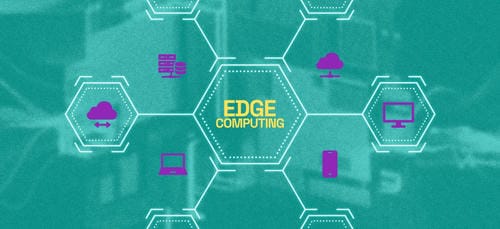
Beyond performance, architectural decentralization strengthens resilience and security. When data is processed and stored across a geographically dispersed edge fabric, the impact of outages or failures in any single data center is diminished. Distributed security measures and localized privacy controls can also be integrated directly into edge nodes, reducing the volume of sensitive data transmitted over long distances and giving users greater control over how their information is handled. This decentralization is aligned with broader trends toward federated identity and blockchain-based resource management, which aim to reduce dependence on centralized authorities and offer more transparent, user-centric governance of digital identities and assets.
Another critical component is the integration of next-generation networking technologies such as Multi-Access Edge Computing (MEC), which extends edge paradigms into cellular and broadband access networks. MEC frameworks embed computational resources within or near base stations, enabling third-party developers to deploy services that operate with the same low latency and network efficiency traditionally available to telecom operators. For metaverse services, MEC plays a dual role as both an execution environment and a delivery platform, shrinking the loop between client device, network access, and real-time application logic. However, architecting for the metaverse at the edge is not without its challenges.
(Table 3- Benefits vs Challenges of Edge-Enabled Metaverse)
Resource allocation across distributed nodes, consistency and synchronization of state across a geographically partitioned infrastructure, and interoperability among heterogeneous edge platforms are active areas of research and development. Algorithms for dynamic offloading—deciding which tasks execute locally, at nearby edge nodes, or in remote clouds—must balance competing objectives such as latency, power consumption, and resource utilization. Additionally, the sheer scale of devices and services envisioned in a worldwide metaverse demands robust orchestration frameworks capable of coordinating millions of edge endpoints with minimal overhead.
Interplay of Edge Intelligence and Immersive Experience
To realize truly immersive virtual environments that feel seamless to users, the metaverse architecture must blend edge computing with intelligent processing. Computational tasks such as semantic understanding of user actions, contextual adaptation of virtual environments, and predictive pre-rendering involve machine learning algorithms that benefit from distributed execution. Edge intelligence—where AI models and inference engines operate at or near edge nodes—can enhance responsiveness and optimize user interactions by forecasting user needs before they occur. This capability is especially vital for complex metaverse functions like adaptive environment rendering, personalized content delivery, and predictive resource pre-allocation, which all contribute to a continuous, immersive experience.
In practical terms, when a user moves through a dense virtual cityscape or engages in multi-player interactions, edge AI modules can pre-fetch relevant assets or pre-compute likely interaction outcomes based on learned patterns, effectively hiding latency from the user. Similarly, for multi-modal sensory inputs—such as haptic feedback, spatial audio, and gesture recognition—edge-hosted inference engines can correlate and process heterogeneous data streams far more quickly than if the same tasks were centralized. By distributing these intelligent components across the network edge, architects can combine high-throughput data ingestion with context-aware computing, delivering experiences that feel natural, responsive, and persistently available.
This interplay between edge infrastructure and immersive service logic redefines how we think about the layers of computing in the metaverse. Rather than viewing VR or AR devices as passive endpoints connected to a distant supercomputer, the edge-enabled metaverse envisages a continuum of computing that spans user devices, local edge nodes, and global cloud services, each contributing specific capabilities to a cohesive whole. As research and implementation efforts progress, this architecture will be instrumental in supporting the heterogeneous needs of entertainment, collaboration, industrial digital twins, and persistent social environments that define the ambitions of the metaverse.
(While every effort has been made to ensure accuracy, technology evolves rapidly, and errors may exist. The author and blog disclaim any liability arising from reliance on this content.)
Updated March 30, 2026
About the Author
Kimberly Santos is a senior systems architect and technology strategist with over 15 years of experience designing distributed computing platforms for real-time and immersive applications. Her career spans roles in edge computing research, cloud infrastructure engineering, and large-scale virtual environment deployment, including collaborations with leading XR developers and telecom integrators.
References
[1] IEEE Metaverse. What is the infrastructure of the metaverse? Metaversereality.
[2] Xu, M., Ng, W. C., Lim, W. Y. B., et al. (2023). A full dive into realizing the edge-enabled metaverse: visions, enabling technologies, and challenges. IEEE Communications Surveys & Tutorials.
[3]: Edge-Enabled Metaverse: The Convergence of Metaverse and Mobile Edge Computing. Tsinghua Science and Technology. Sciopen.
[4] ScienceDirect. A trustless architecture of blockchain-enabled metaverse.
Tactile Internet
The Tactile Internet Is Transforming Digital Networks into Real-Time Systems of Touch and Control
The Tactile Internet represents a paradigm shift in networking—a future where communication isn’t limited to sending text, images, or video, but also includes touch and haptic feedback transmitted over ultra-fast networks.
Digital Twins
The World in Duplicate: How Digital Twins Are Learning to Predict Reality
For decades, industries relied on models that were, at best, carefully educated guesses. Engineers built simulations, analysts ran forecasts, and planners extrapolated trends from historical data.
Projects
How Hands-On Projects Unlock Mastery of Next-Gen Technology Concepts Every Enthusiast Should Try?
These projects share a common theme: they take real technologies from current research and industry and break them into manageable, engaging activities that teach principles of design, computation, electronics, and connectivity.