


March 13, 2026
Key Highlights:
● Calm Technology promotes designing digital experiences that respect user attention rather than exploit it.
● Traditional attention-driven design relies on notifications and reward loops that can lead to attention addiction.
● Calm Tech reduces cognitive load through subtle, non-intrusive interactions and ambient communication.
● This approach supports better focus, well-being, and intentional technology use in an increasingly connected world.

Estimated Reading Time: 10–12 minutes┃Post by Sophie Parker
In today’s digital landscape, human attention is treated as a commodity. The major platforms and ecosystems of modern tech—from social media feeds to messaging apps—are built to capture and hold your focus as long as possible. This shift in design priorities, often referred to as the attention economy, has shaped product decisions for over a decade, driving unprecedented levels of engagement while simultaneously fostering what many experts describe as attention addiction—a compulsive cycle of checking, scrolling, and reacting to your devices without intentionality. Inspired by these challenges, a quieter movement has emerged in the design community that seeks not to hijack attention but to respect and preserve it. That movement is Calm Technology, a philosophy focused on designing digital experiences that minimize cognitive load and integrate smoothly into human life without overwhelming it.
When Design Meets Distraction: Rethinking Technology in the Age of Attention Economy
At the heart of Calm Technology is a simple idea: technology should work with human attention rather than against it. Historically, designers have pursued metrics like time-on-device, click-through rates, and session duration to indicate success, as if more engagement always means better utility. But this model has dark consequences. Features like push notifications, algorithmically curated feeds, and unpredictable reward loops—common hallmarks of ad-driven platforms—are powerful hooks for the brain’s reward systems, leading to habitual checking and a persistent sense of alertness that many describe as addiction. These interface patterns are not accidental; they are the product of deliberate design choices that prioritize engagement over user well-being.
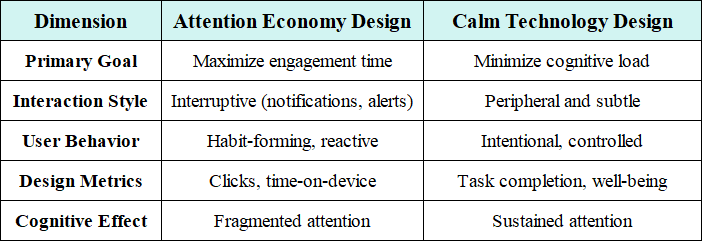
(Table 1- Attention Economy vs Calm Technology)
In contrast, Calm Technology advocates for peripheral interaction—information should be present but not intrusive, moving to the center of attention only when necessary. This approach is rooted in foundational work by Mark Weiser and John Seely Brown, who defined calm technology as that which informs without demanding focus, and that resides primarily in the periphery of user awareness. Technologies built this way permit users to remain connected to their environment and tasks without constant interruption. In practice, this might look like gentle ambient indicators, subtle sensory cues, or interfaces that reveal information only at the appropriate time, allowing users to stay contextualized in their primary activities.

Calm Tech principles emphasize several core tenets: technology should require the smallest possible amount of attention, inform without causing stress, make effective use of the periphery, and create calm rather than frenzy. These principles extend beyond minimalism as an aesthetic; they are about preserving cognitive bandwidth and respecting human prioritization. By reducing interruptions and noise, calm technologies make space for focus, intentional interaction, and a sense of control that has been eroded by attention-maximizing designs.
Calm Tech as an Alternative to Attention Addiction
Understanding Calm Technology begins with recognizing attention addiction as a design problem rather than just a personal one. Addiction to digital experiences is fueled by patterns that trigger dopamine release—reward signals that reinforce behaviors like endless scrolling, frequent notifications, and perpetual task switching. These reward loops are not emergent side effects; they are engineered into interfaces precisely because they increase engagement and, by extension, monetizable attention. The result is a feedback loop where users feel compelled to stay connected, and platforms are rewarded for keeping them so.
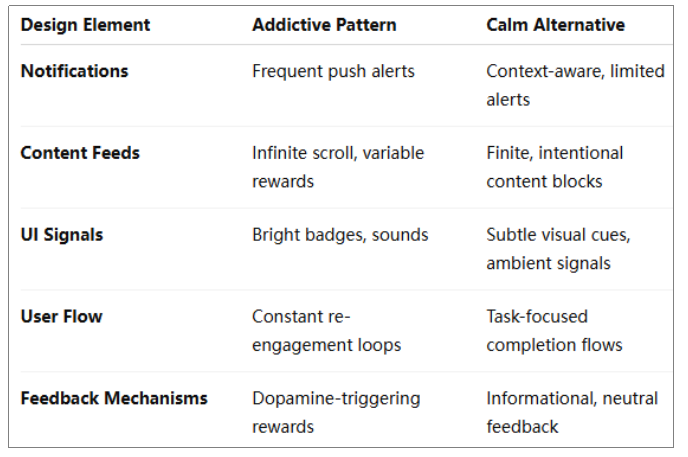
(Table 2- Design Patterns – Addictive vs Calm Interfaces)
Calm Technology challenges this model by reframing attention as something to respect and preserve. Instead of exploiting the brain’s susceptibility to reward variability, calm designs aim to minimize disruptions and let users allocate their mental resources where they matter most. This philosophy resonates with related movements such as digital minimalism, which encourages intentional tech use based on personal values rather than default habits. While digital minimalism provides a behavioral framework for individuals to reassess how they interact with devices, Calm Technology offers a design framework for creators and engineers to build tools that support intentional use rather than disrupt it.
To illustrate, consider a smart thermostat designed with calm principles: rather than demanding attention with frequent prompts or complex menus, it quietly senses temperature changes and adjusts in the background, offering information only when the change is meaningful. Contrast this with a typical app that floods users with alerts about every minor fluctuation or update. The former stands in the periphery of awareness until needed; the latter pulls focus continuously. This distinction is central to calm design and reveals how subtle shifts in interaction patterns can profoundly affect cognitive load and emotional well-being.
Another aspect where Calm Technology diverges from mainstream design is communication style. Traditional digital interfaces often rely on loud or interruptive communication—pop-ups, banners, badges, and sounds that demand immediate attention, regardless of context. Calm Tech instead emphasizes ambient or non-verbal communication channels, letting users glean information through peripheral cues such as gentle color changes, subtle vibrations, or contextual hints. These cues allow users to maintain situational awareness without breaking their focus or inducing stress.

The broader implications of this shift are significant. When technology supports calm engagement, it fosters better cognitive conditions for creativity, deep work, and presence. Users are less likely to experience the fragmented attention states that accompany multitasking and incessant notifications. Instead of being at the mercy of design elements that constantly solicit interaction, individuals can direct their focus with intention. In this sense, Calm Technology is not merely a set of design best practices—it’s a philosophy that re-centers technology around human priorities rather than algorithmic imperatives.
Moreover, Calm Technology responds to a cultural moment where digital well-being is becoming a criterion for product success rather than a fringe consideration. Users increasingly evaluate technology not just on functionality, but on emotional and cognitive impact. They are tired of experiences that fragment their attention and erode their sense of agency. Calm designs that foreground user calmness and intentional focus can thus represent a competitive advantage, appealing to an audience fatigued by attention exploitation.
Critically, though, Calm Technology is not synonymous with the rejection of digital tools. It’s not a call to abandon tech or retreat from connectivity; instead, it proposes a harmonious integration of technology into life. Devices and interfaces can be both functional and non-intrusive, responsive yet unobtrusive. When designers embrace calm principles, they create experiences that enhance human capacity without overstimulating or overwhelming it.
As we navigate a future where devices are ever more embedded in everyday life—from smart homes to wearable computing—the question isn’t whether technology will be present, but how it will shape our attention, cognition, and emotional states. Calm Technology offers one compelling answer: build systems that respect human focus, minimize unnecessary intrusion, and help users spend their cognitive resources on what truly matters.
FAQs:
1. How does Calm Technology differ from general minimalist design?
Minimalism primarily focuses on visual simplicity. Calm Technology goes further: it’s about minimizing cognitive load, prioritizing attentional economy — meaning technology recedes into the periphery of awareness rather than just having a clean interface.
2. Can Calm Technology work in products that need real‑time alerts (e.g., emergency systems)?
Yes—Calm Technology doesn’t eliminate alerts; it contextualizes them. Urgent events still surface to the center of attention, while non‑critical information stays in the periphery until relevant, preserving focus without silencing important signals.
3. How does Calm Technology relate to psychological models of attention?
Calm design acknowledges attention is limited and layered. It intentionally places information in peripheral awareness, reducing overload, and allows people to maintain focus on primary tasks without constant interruptions.
4. Are there real‑world products that embody Calm Technology?
Yes. Examples include smart devices that operate quietly in the background and communicate only when necessary (like ambient indicators or subtle tactile cues), as well as products certified under Calm Tech design frameworks that prioritize attention and periphery.
(While every effort has been made to ensure accuracy, technology evolves rapidly, and errors may exist. The author and blog disclaim any liability arising from reliance on this content.)
Updated March 20, 2026
About the Author
Sophie Parker is a technology writer and user experience strategist whose work explores the intersection of design, human cognition, and digital well-being. Alexandra holds an M.S. in Human-Computer Interaction and has lectured on mindful design practices at national design conferences.
References
[1] Harris, T. (2020). How Technology is Hijacking Your Mind — and What You Can Do About It. TEDx Talk.
[2] Tristam, W. (2019). "The Quiet Revolution of Calm Tech: How Mindful Design Can Save Us From Tech Overload." The Verge.
[3] Russell, D. (2020). Designing for Attention: How to Build Calm, Engaging Digital Experiences. UX Design Institute.

Cloud Computing
Cloud Computing Transforms Climate Modeling and Environmental Prediction
Climate scientists are facing a profound shift in how they approach environmental prediction.
Edge Computing
Real-Time Worlds Powered by Edge Computing Transform the Metaverse Beyond VR
The “metaverse” is often discussed in terms of virtual reality (VR) headsets and immersive graphics, but at its core, this next-generation digital realm is a massive distributed computing challenge that extends far beyond display hardware.
6G
6G Will Transform Connectivity, Intelligence, and Sensing Beyond Mere Speed
When most people hear “6G,” the first thought is typically faster downloads and streaming.