


March 7, 2026
Key Takeaways:
● Precision gene-editing enables crops and livestock to develop drought resistance, disease tolerance, improved yield, and enhanced nutritional profiles, accelerating traditional breeding processes.
● Networks of sensors, drones, and automated machinery monitor environmental conditions in real time, allowing precise application of water, nutrients, and pest management for optimized productivity.
● Precision irrigation and resource-efficient CRISPR-edited crops reduce water usage, fertilizer runoff, and overall environmental footprint, promoting sustainable farming practices.
● Combining biotechnology and data-driven agriculture promises a resilient, sustainable, and efficient food production system capable of addressing global population growth and climate pressures.
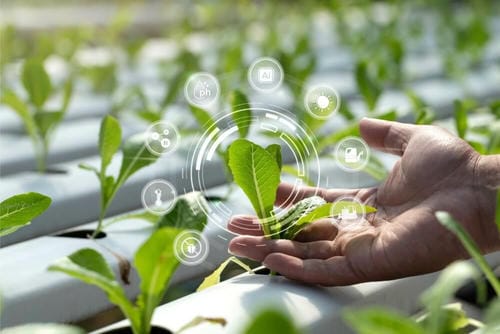
Estimated Reading Time: 10–12 minutes┃Post by Oliver Bennett
Agriculture stands at a technological inflection point where tools that once seemed futuristic are now tangible solutions shaping how we grow food. Among the most transformative of these are CRISPR gene-editing technologies and networks of connected sensors powered by the Internet of Things (IoT). This convergence represents a foundational shift from traditional farming practices toward a data-driven, precision ecosystem capable of addressing global food security challenges while reducing environmental impacts. The world’s population is projected to approach 10 billion by 2050, and with water resources dwindling and arable land under pressure, increasing crop yields sustainably is an imperative rather than an option.
Biotechnology Meets Precision Sensing: The New Agricultural Paradigm
CRISPR—an acronym for Clustered Regularly Interspaced Short Palindromic Repeats—is a revolutionary gene-editing technique that allows scientists to make precise changes in the DNA of plants and animals. Unlike earlier genetic modification methods, CRISPR enables highly targeted edits without introducing foreign DNA, making it a remarkable tool for developing desirable traits such as drought resistance, disease tolerance, enhanced nutritional profiles, and improved yield performance.
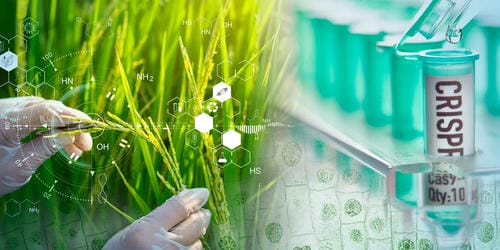
Researchers have successfully applied CRISPR to major staple crops such as rice, wheat, and maize, producing variants that maintain yield under drought, tolerate heat and salinity, or even resist parasitic threats, which directly mitigates yield losses and strengthens food security in vulnerable regions. CRISPR’s precision does more than expedite crop improvement compared to conventional breeding; it also reduces the risk of unintended genomic changes and enables multi-trait development within condensed time frames.
However impressive CRISPR’s potential, it does not operate in a vacuum. Realizing its benefits at scale requires integration with broader agricultural practices that can monitor, manage, and act on environmental conditions in real time. This is where IoT comes into play. The Internet of Things in agriculture refers to interconnected networks of sensors, actuators, drones, and automated machinery that continuously monitor environmental parameters such as soil moisture, nutrient levels, temperature, humidity, pest presence, and crop growth metrics. These sensors feed data into centralized systems that use analytics, machine learning, and cloud computing to generate actionable insights.
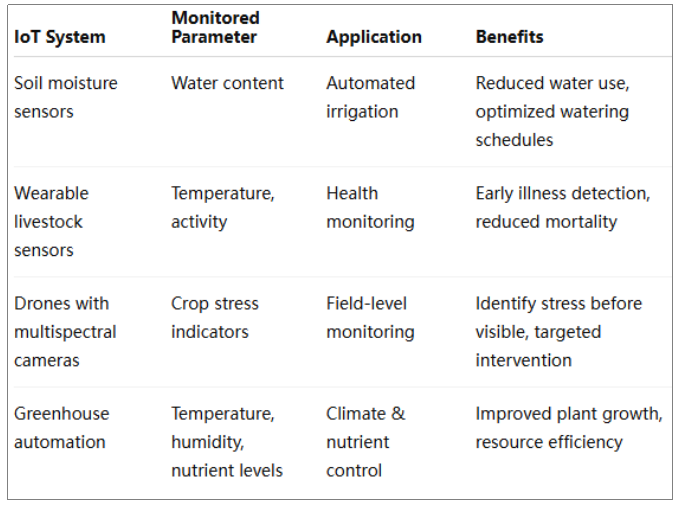
(Table 1- IoT Applications in Agriculture)
In precision agriculture, IoT systems enable farmers to apply inputs—like water, fertilizer, and pesticides—only where and when they are needed, dramatically reducing waste and environmental impact while boosting productivity. For instance, large commercial operations in the U.S. Midwest have implemented IoT-enabled irrigation systems that monitor soil moisture and adjust watering schedules automatically, resulting in yield increases and significant water savings. Other applications include livestock health monitoring with wearable sensors that track temperature and activity to detect illness early and greenhouse automation that fine-tunes climate control for optimal plant growth.
The synergy between biotechnology like CRISPR and IoT sensor networks is not merely additive; it is transformative. CRISPR can tailor crops to be more resilient and resource-efficient, but those traits are most effective when paired with precision data that ensures crops are managed according to micro-environmental conditions. An IoT array that continuously profiles soil and weather conditions can, for example, guide decisions about where a drought-tolerant CRISPR-edited variety should be planted to maximize survival and productivity. Likewise, enhanced genomic traits can help IoT-driven systems more reliably predict growth outcomes and adjust management strategies on the fly, closing the loop between genetic potential and environmental reality.
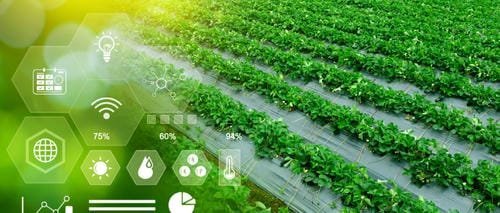
Feeding Tomorrow’s World with Smarter, More Resilient Agriculture
The practical implications of integrating CRISPR and IoT into agriculture are profound. At the farm level, connected sensors transform the land into a rich data source: soil moisture sensors report sub-field variability, drones with multispectral cameras identify crop stress before it is visible to the human eye, and automated controls adapt irrigation or nutrient application in real time, improving resource efficiency and reducing operational costs. This level of precision represents a massive improvement over historical blanket application practices where every field received the same treatment regardless of localized needs.
CRISPR’s role in this ecosystem is equally potent. By directly editing genes responsible for critical adaptive traits, scientists are engineering crops that can withstand the increasing volatility of climate change—whether it’s drought, heat waves, salinity, or novel pest pressures.
CRISPR-edited crops have been developed to maintain yield under drought stress by modifying genes that govern water-use efficiency and stress signaling pathways. Other innovations include edits that confer resistance to nematode pests—organisms that historically cost farmers billions in lost productivity—by targeting host-pathogen interaction pathways that CRISPR can disrupt with precision.
CRISPR applications extend beyond plant genomes to animal agriculture as well, where gene-editing is being explored to enhance livestock disease resistance and productivity. These developments suggest that gene editing could help reduce antibiotic use in animal husbandry and enhance animal welfare, though each modification must undergo rigorous safety and regulatory review before entering the food supply.
Large-scale adoption of these technologies also has environmental implications. Precision irrigation reduces water use dramatically; researchers and farmers have observed reductions in water consumption of up to 40% in some IoT-enabled systems. CRISPR-edited crops that thrive with less water and nutrient inputs could further reduce agriculture’s environmental footprint by lowering fertilizer runoff and conserving scarce freshwater resources.
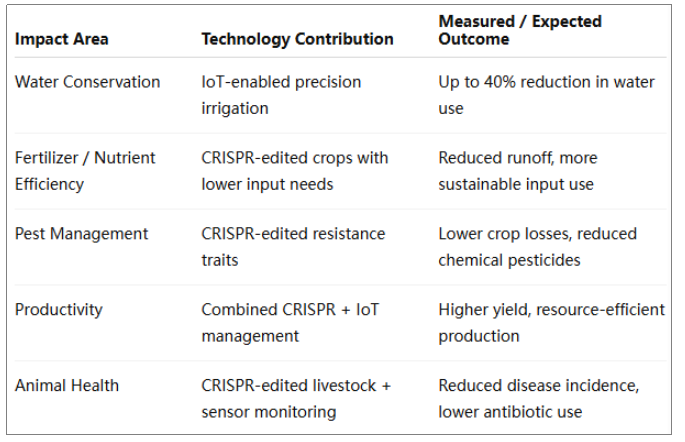
(Table 2- Environmental and Operational Impacts of CRISPR + IoT Integration)
Despite these advances, challenges remain. IoT adoption grapples with issues of digital literacy, data security in rural environments, and uneven access to connectivity, particularly in developing regions. CRISPR’s rapid acceleration sparks regulatory debates around safety, ecological impact, and equitable access. However, regulatory frameworks are evolving in several regions, and public acceptance of gene-edited crops continues to grow as researchers and stakeholders emphasize safety, sustainability, and transparency in development processes.

The integration of CRISPR and IoT signals a new era in agriculture—one where biology and data science coalesce to sustainably increase productivity, conserve resources, and adapt to a changing climate. As global challenges intensify, this intersection of technology and agricultural practice could hold the key to feeding tomorrow’s world.
(The data and insights presented are based on publicly available information and personal analysis. Accuracy is not guaranteed, and market conditions may change.)
Updated March 29, 2026
About the Author
Oliver Bennett is a technology writer and agricultural systems analyst with over a decade of experience exploring the intersection of biotech innovation and digital transformation in food systems. She holds a master’s degree in agricultural engineering and has consulted for ag-tech startups and research institutions focused on precision farming, genomics, and sustainable food production. Alex’s work has been published in leading tech and science outlets where she covers emerging advancements in genetics, sensor networks, and smart agriculture technologies. Her expertise bridges complex scientific developments with pragmatic insights for farmers, technologists, and policymakers navigating the future of global food security.
References
[1]: CRISPR in agriculture: editing, benefits, and developments. (2024). Innovative Genomics Institute.
[2]: CRISPR gene editing impact and applications for agriculture. (2024). FDA.
[3]: IoT in precision farming: case studies and applications. (2025). Agridisk.
[4]: IoT-enabled precision agriculture ecosystem. (2026). MDPI.

6G
6G Will Transform Connectivity, Intelligence, and Sensing Beyond Mere Speed
When most people hear “6G,” the first thought is typically faster downloads and streaming.
Cloud Computing
Cloud Computing Transforms Climate Modeling and Environmental Prediction
Climate scientists are facing a profound shift in how they approach environmental prediction.
Edge AI
Edge AI Will Reshape How Energy Is Generated, Distributed, and Consumed
The global energy landscape is entering a period of rapid transformation driven by the convergence of advanced digital technologies and the urgent need for more resilient, efficient, sustainable power systems.