


March 5, 2026
Key Takeaways:
● DIY tech projects provide hands-on learning with microcontrollers, robotics, AI, and IoT systems.
● Platforms like Raspberry Pi, Arduino, and ESP32 make advanced computing and electronics accessible to enthusiasts.
● Building devices teaches core concepts such as control loops, sensor integration, wireless communication, and edge AI.
● Rapid prototyping with 3D printing and CAD tools develops skills in design, ergonomics, and material constraints.
● Engaging in these projects transforms abstract technology concepts into practical, cross-disciplinary engineering experience.

Estimated Reading Time: 11–13 minutes┃Post by Nolan Pierce
In an age when technology evolves faster than curricula can keep up, DIY tech projects are an invaluable way for learners, hobbyists, and makers to gain hands-on experience with next-generation concepts. From microcontrollers and robotics to artificial intelligence and Internet of Things (IoT) systems, personal projects let you explore complex systems outside of formal classrooms or corporate labs. These projects share a common theme: they take real technologies from current research and industry and break them into manageable, engaging activities that teach principles of design, computation, electronics, and connectivity.
It’s no longer enough to passively consume gadgets; understanding how they work unlocks innovation. Building your own smart devices lets you learn through doing, and the satisfaction of watching a project come alive—whether it’s a self-navigating robot or a tiny weather station—can be transformative.
One of the most accessible platforms for cutting-edge DIY tech is the Raspberry Pi family of single-board computers (SBCs).
The Raspberry Pi continues to be a cornerstone for hobbyists and educators alike, with projects ranging from basic automation to artificial intelligence integrations. Enthusiasts have built everything from AI-powered cameras that describe what they see to robotic rovers that interact with users and perform autonomous tasks—all using Raspberry Pi hardware with open-source software. These projects demonstrate how computing power once confined to desktops and labs is now accessible on a credit-card-sized device, bringing serious computing applications into hobbyist hands. Building a Raspberry Pi-based system teaches you not just how to assemble hardware, but also how to install operating systems, interface with sensors and cameras, and work with programming languages like Python to manage machine learning and computer vision tasks. Such projects provide a bridge from playful tinkering to real software engineering skills.

Platforms like Arduino and ESP32 microcontrollers similarly offer gateways into electronics and IoT. Arduino boards have been used in countless DIY builds to teach basic circuit logic, motor control, and interactive programming. More advanced Arduino and ESP32 builds incorporate sensors for temperature, light, and motion, enabling devices like automated environmental monitors or smart home interfaces that can be controlled over Wi-Fi. Arduino’s simplicity and a massive community of shared code make it ideal for beginners, while the same principles scale up into more sophisticated designs such as IoT-connected dashboards and autonomous bots. These kinds of projects help learners transition from understanding how a microcontroller outputs a blinking LED to how a tiny board can participate in a networked system of devices.
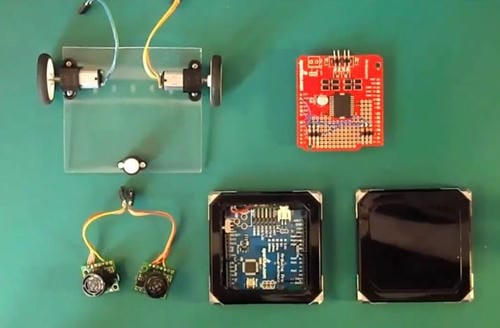
One of the most exciting aspects of DIY tech is its ability to embed real technological concerns—like AI, wireless communication, and robotics—into playful but serious projects. For example, hobbyists routinely build line-following robots or obstacle-avoiding bots that incorporate ultrasonic sensors and basic AI behavior patterns. These projects teach core robotics algorithms and sensor fusion while remaining approachable with off-the-shelf parts and open tutorials. Some makers even push into edge AI applications, using microcontrollers with onboard neural inference (like MicroTVM or TensorFlow Lite on microcontrollers) to perform simple machine learning tasks locally, without cloud dependence. While full edge computing projects can be complex, breaking them down into incremental builds—starting with sensor data collection and gradually adding local pattern recognition—reveals how cutting-edge AI concepts scale down to DIY environments.
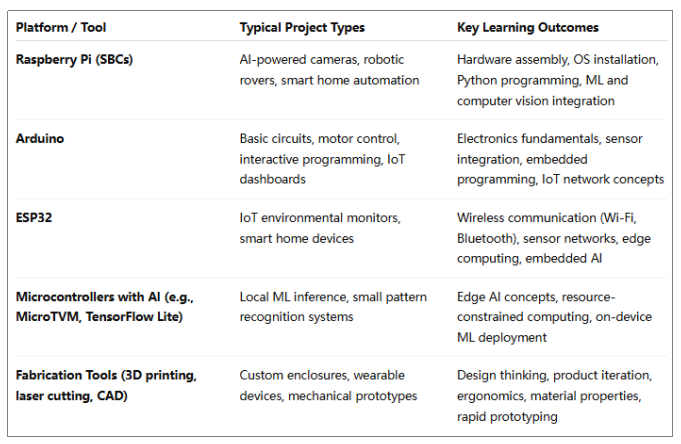
(Table 1: DIY Tech Platforms and Applications)
A further area where DIY tech shines is in smart environments and connected objects. Smart home projects that integrate voice control, environmental sensing, and automated actuation let learners directly experiment with the Internet of Things. Building your own smart lighting, automated blinds, or environmental monitors using microcontrollers and open firmware like Home Assistant teaches how networks of devices communicate, how data flows between sensors and dashboards, and how user experiences are encoded into software and hardware interactions. These projects make tangible the abstract ideas of distributed computing and embedded systems, which are central to modern networks of connected devices in industry and consumer electronics alike.
DIY tech isn’t limited to digital electronics or computing alone. It also extends into physical fabrication and rapid prototyping, enabling makers to learn design thinking and product iteration. Laser cutting, 3D printing, and CAD design tools have become inexpensive and widely available, allowing anyone to prototype physical enclosures, mechanical parts, and structural components. Projects like custom wearable devices or personalized enclosures for electronics teach you about form factors, user ergonomics, and material properties, while sharpening skills in modern design tools. These fabrication techniques bring a tactile understanding of the constraints and tradeoffs that professional engineers balance every day, from weight and strength to manufacturability and aesthetics.
In short, DIY tech projects open windows into the cutting edges of electronics, computing, AI, and design. They let you experiment, fail, iterate, and ultimately understand how modern technologies work at a fundamental level.
Core Concepts You Learn by Doing
The power of DIY learning lies in its ability to turn abstract concepts into physical experiences. Complex ideas like sensors, control loops, wireless communication, and machine learning can feel opaque in textbooks, but integrating these into a tangible device makes them intuitive. When you build a weather station using a suite of sensors, for example, you’re not just learning about temperature thresholds—you’re learning about analog-to-digital conversion, signal conditioning, data logging, and visualization. These are the same concerns engineers handle when developing commercial environmental monitoring suites.
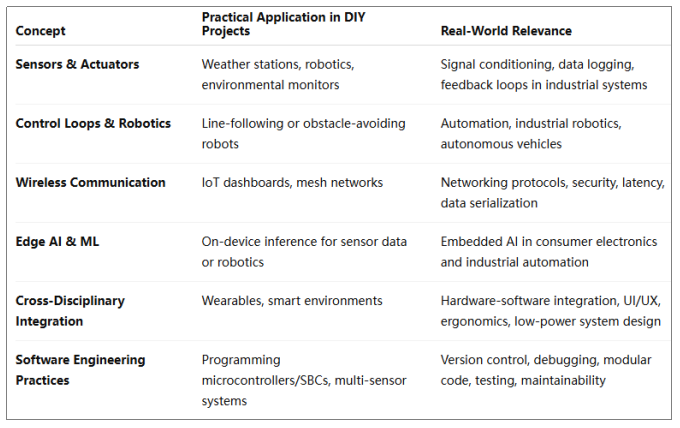
(Table 2: Core Technology Concepts Learned Through DIY Projects)
Consider the robotics projects that incorporate closed-loop control: line-following bots or autonomous navigation builds often rely on feedback control systems. Programming a microcontroller to read sensor values and adjust motor outputs based on that information is a direct implementation of a control loop. Starting with simple on/off behaviors and scaling up to proportional control teaches essential concepts in automation that are directly applicable in industrial robotics and autonomous vehicles. Similarly, edge AI projects that use local inference engines on microcontrollers bring home the challenge of making intelligent decisions under resource constraints—a real concern in embedded systems design for consumer products and industrial automation alike.
In the realm of wireless communication, projects that connect devices over Wi-Fi, Bluetooth, or even mesh protocols allow learners to witness foundational networking principles firsthand. For instance, connecting sensor arrays to cloud services introduces topics like data serialization, network protocols, security, and latency. Building your own IoT dashboard teaches you how data moves from physical sensors to visualization tools, and how devices authenticate and share information securely. It’s one thing to hear about TCP/IP stacks in a lecture, and another to debug them when your own DIY sensor feed drops packets intermittently.
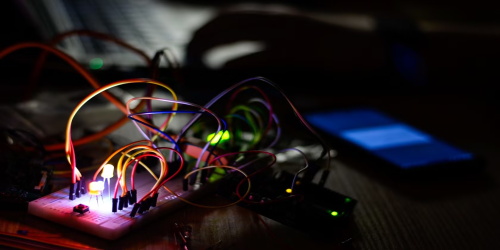
DIY projects also often involve cross-disciplinary knowledge. Creating a custom wearable device for health or fitness may involve understanding accelerometer sensor fusion, low-power programming, user interface design, and even ergonomics. Integrating sensors with mobile apps introduces wireless protocols and user experience concerns. These multidisciplinary efforts mirror real engineering challenges where systems don’t live in silos but span hardware, software, and human factors.
For makers interested in computation and software, programming microcontrollers or SBCs introduces real software development practices—version control, debugging, modular code architecture, and testing. Transitioning from a blinking LED sketch to a configurable multi-sensor data logger requires structuring code, handling exceptions, and thinking about maintainability. These are core software engineering skills, and DIY builds provide a sandbox environment to practice them without the risk or bureaucracy of corporate development.
DIY tech projects are more than hobbies. They are apprenticeships in the technologies that drive the modern world. Whether you’re aiming for a career in engineering, experimenting with cutting-edge systems for curiosity, or simply equipping the next generation with practical skills, building technology from scratch demystifies the machines and systems that shape our future.
(This article is for informational purposes only and does not constitute professional advice. DIY tech projects should be undertaken with proper safety precautions, supervision where appropriate, and respect for local regulations and electronic handling guidelines.)
Updated March 23, 2026
About the Author
Nolan Pierce is a technology writer and maker with over a decade of experience building and documenting DIY electronics and software projects. With a background in electrical engineering and hands-on work in robotics, embedded systems, and IoT development, he has taught workshops on microcontroller programming, AI integrations on edge devices, and rapid prototyping with makerspaces. Alex’s articles appear in leading tech publications, where he explores how hobbyists and professionals alike can leverage DIY projects to learn advanced concepts in computing and design.
References
[1] OMTech. (2024). 10 Hands-On Laser Projects to Teach Design Thinking in the Classroom.
[2] Tom’s Hardware. (2024). Best Raspberry Pi Projects: March 2025.
[3] IT Donut. (2025). Exciting DIY Tech Projects for 2025: Build, Create, Innovate.

Edge AI
Edge AI Will Reshape How Energy Is Generated, Distributed, and Consumed
The global energy landscape is entering a period of rapid transformation driven by the convergence of advanced digital technologies and the urgent need for more resilient, efficient, sustainable power systems.
6G
6G Will Transform Connectivity, Intelligence, and Sensing Beyond Mere Speed
When most people hear “6G,” the first thought is typically faster downloads and streaming.
Cloud
Cloud 3.0: The AI-Powered Nervous System of the Digital Economy
Over the past two decades, cloud computing has transformed from a novel IT utility into the backbone of digital infrastructure.